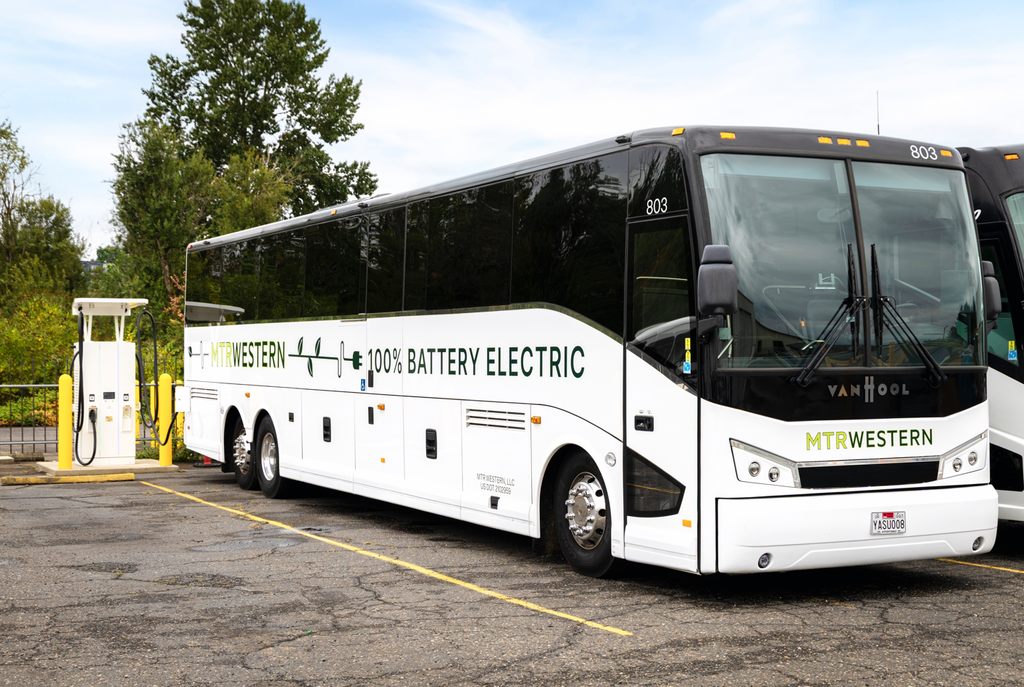
Three years ago, we were putting our first electric vehicle into service.
Today, MTRWESTERN has 22 electric vehicles operating in our fleet, seven Level 3 chargers commissioned, six additional EVs in the queue and four more Level 3 chargers planned. Those numbers are milestones, but they aren’t the most important part of the story. The more meaningful change is everything we’ve learned between electric vehicle number one and electric vehicle number 22.
For us, electric transportation has swifty moved from experimentation into a core operating capability. These EVs aren’t demonstration vehicles. They’re moving people, working routes and becoming part of the everyday decisions our operations, maintenance and transportation teams make.
And after three years of doing the work, one lesson stands above the rest: fleet electrification is about much more than the fleet.
1. The Electric Vehicle is Only One Piece of the Operation
Buying an EV is relatively easy to understand. Operating one reliably every day is where things get more interesting.
Commercial transportation has little tolerance for “almost.” The vehicle needs to be ready when passengers are ready. That means knowing whether a particular EV fits the duty cycle, how much range conditions will require, when and where it will charge, how that charging fits into dispatch, what happens when schedules change, and what contingency plan is available when the unexpected happens.
Then there are the less visible pieces: electrical service, charging hardware, site design, driver familiarization, maintenance procedures and the institutional knowledge that develops only after a fleet has accumulated real operating experience. We know considerably more about all of those things today than we did three years ago.
That knowledge compounds. Every deployment gives our drivers, maintenance teams, dispatchers and operations leaders another set of real-world conditions to learn from. The value of vehicle number 22 isn’t just another electric vehicle in the fleet. It’s that vehicle number 22 enters an organization that has already learned from the 21 before it.
2. Charging Infrastructure is Transportation Infrastructure
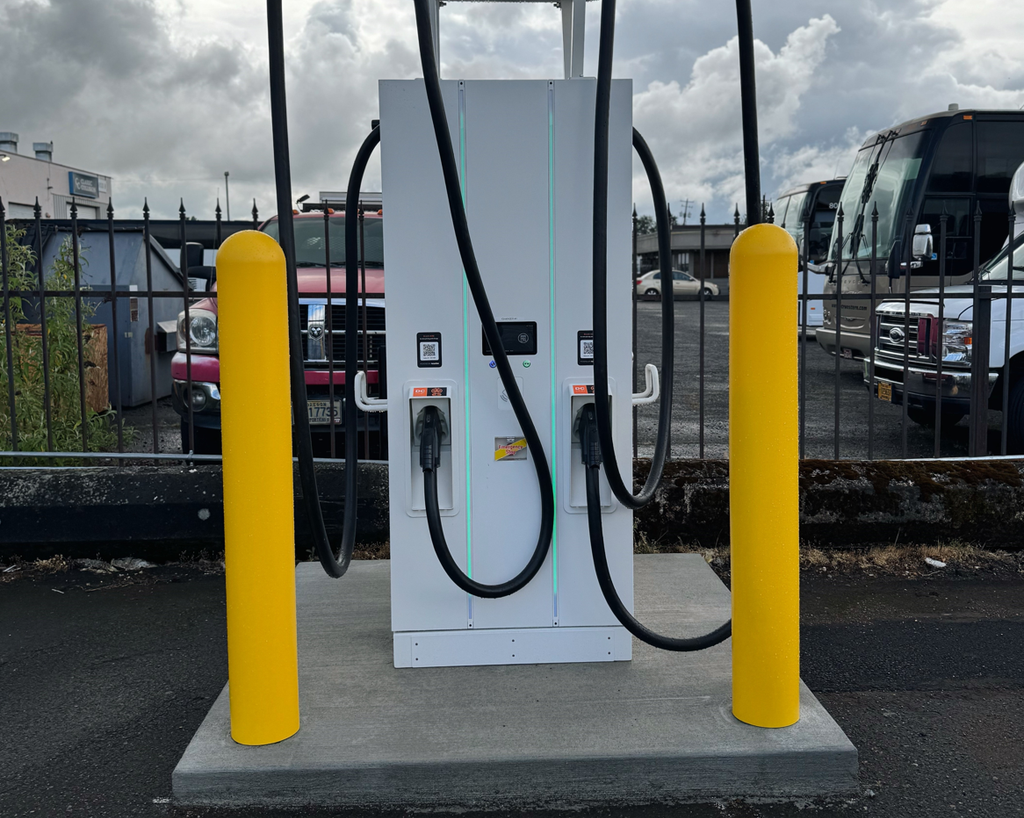
Our fleet growth has been accompanied by a parallel investment in charging. MTRWESTERN has commissioned seven Level 3 chargers, with another four planned. As our EV operations grow, we’re increasingly thinking about charging less as an amenity attached to a vehicle and more as a fundamental part of the transportation network.
Two upcoming projects illustrate that evolution. In collaboration with the Oregon Department of Transportation, additional charging infrastructure is planned at Portland Union Station and the University of Oregon to support electric intercity transportation between Portland and Eugene. These are not chargers behind the fence at an MTRWESTERN facility. They are intended to support transportation operating in the public right-of-way and connecting Oregon communities.
That changes the question.
Instead of only asking, “Where do we charge our buses?”, operators and transportation agencies increasingly need to ask, “Where does charging need to exist for an electric transportation network to work?”
That is a larger infrastructure question, and one that will become more important as electric commercial transportation expands.
3. Access to Capital Influences the Pace of Adoption
Another lesson from our first three years is straightforward: our EV fleet would not have evolved at its current pace without outside funding support for vehicles and charging infrastructure.
Oregon’s Diesel Emissions Mitigation Grant Program is funded in part through Volkswagen Environmental Mitigation Trust dollars and was established to help businesses, governments and equipment owners replace older, higher-emitting diesel equipment with cleaner technologies. Oregon’s rules specifically provide funding pathways for non-government-owned eligible buses, including all-electric replacements.
MTRWESTERN has experienced that program directly. Oregon DEQ’s 2024 awards included funds for MTRWESTERN to replace four diesel motorcoaches with four all-electric motorcoaches.
At its simplest, the underlying idea makes sense: retire older, higher-emitting equipment and replace it with newer, cleaner technology. Oregon’s current program continues to provide funding for businesses and other fleet owners pursuing those replacements. For a commercial operator, however, eligibility isn’t an administrative footnote. It can determine where the next vehicle and the infrastructure supporting it actually go.
4. Our EV Story Started in Washington. Most of the Growth Has Happened in Oregon.
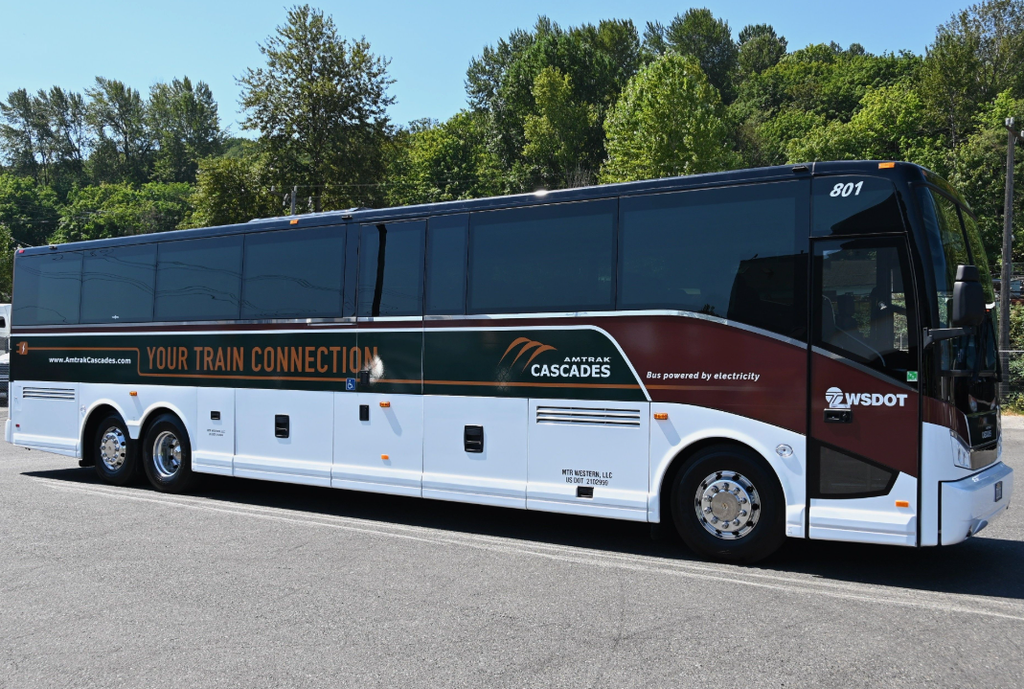
MTRWESTERN is headquartered in Seattle, and our first electric vehicle entered service in Washington in 2023. Yet 21 of our 22 current EVs are now domiciled in Oregon. Six of our seven commissioned Level 3 chargers are there as well. Our next six EVs and four planned chargers are also slated for Oregon.
Why?
Our experience has been that Oregon’s programs created a practical route for private motorcoach operators like MTRWESTERN to participate in zero-emission fleet investment. In Washington, zero-emission funding opportunities have expanded, but MTRWESTERN has yet to identify a comparable funding pathway that supports the specific electric motorcoach models required for our operations.
Washington has also made significant investments in commercial transportation electrification, including the launch of the Washington Zero-Emission Incentive Program, or WAZIP, in 2026. The program is open to fleet operators and transportation businesses and provides point-of-sale incentives for eligible medium- and heavy-duty zero-emission vehicles.
For MTRWESTERN, however, the practical challenge appears to be less about whether a private motorcoach company can participate and more about whether the specific vehicles we need to operate are represented in the program’s approved vehicle catalog. As of our review, the electric motorcoach models that fit our operating requirements do not appear to have a clear eligible pathway through the current catalog.
Our broader experience remains the same: program design influences where investment happens. Oregon’s funding programs have provided a workable pathway for the electric motorcoaches we operate, helping us deploy vehicles, build charging infrastructure and develop real-world operating expertise. In Washington, that pathway has so far been more limited for our particular fleet needs.
5. The Return on Early Investment Isn’t Limited to the Vehicle
Perhaps the most important thing we’ve learned is that the effect of an early EV project doesn’t end with the bus that was purchased.
Our first deployments required us to learn how to commission electric vehicles, operate chargers, schedule charging around service, manage range, train drivers, develop maintenance practices, troubleshoot problems and understand what customers need from an electric transportation operation.
That experience created organizational capability. We subsequently competed for and launched a large-scale, fully electric employee shuttle operation. The earlier grant-supported vehicles did not directly fund that customer operation. What they helped fund was the experience that prepared our organization to confidently take on a larger electric transportation program.
Public investment in an early electric vehicle can certainly get one higher-emitting diesel vehicle off the road. But the impact can extend further. That first deployment can help create an operator that knows how to deploy the next vehicle, and the one after that.
The sequence we have experienced is simple:
Early deployments create operating experience. Operating experience builds capability. Capability makes larger electric transportation projects possible.
For us, that’s one of the strongest arguments for thinking about zero-emission funding as more than a vehicle acquisition program.
6. Private Operators are Part of the Transportation Network, Too
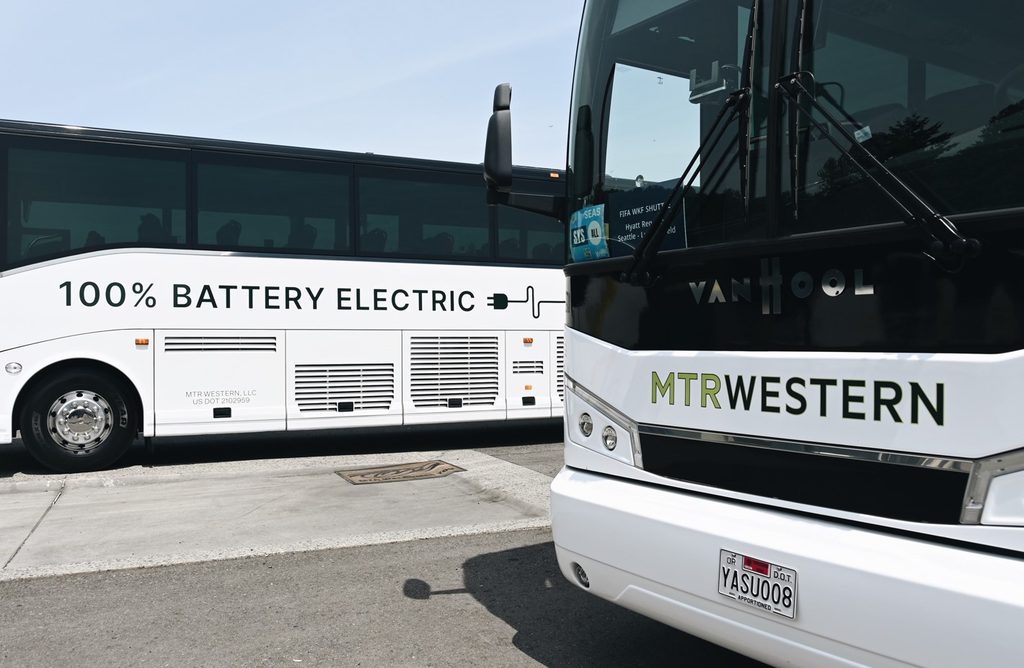
The same principle has implications beyond MTRWESTERN. Private motorcoach companies transport employees, university students, school groups, athletes, event attendees, tourists and intercity passengers. They also operate transportation under contract for public agencies and institutions.
Ownership structures are different, and those differences matter for procurement, accountability and how public dollars are administered.
Emissions, however, come from vehicles. If an older diesel commercial vehicle is replaced by a zero-emission vehicle and continues moving people through the same transportation system, there is an emissions benefit regardless of whether the name on the title belongs to a transit agency or a private operator.
That suggests a useful question for future zero-emission programs: how can eligibility structures account for both who operates the vehicle and what transportation and emissions benefit the investment produces?
Oregon’s experience demonstrates one model. Its Diesel Emissions Mitigation program expressly supports businesses alongside governments and other equipment owners. Washington is developing a different mix of vehicle and infrastructure programs, including the newer WAZIP commercial-vehicle incentive.
For operators like us, the opportunity is to contribute practical experience to that discussion.
7. Electrification Still Has Limits and That’s Part of Doing it Well
Three years of EV operations have also taught us where not to oversimplify. Not every transportation assignment is ready to go electric today. Vehicle range matters. So do charging availability, acquisition cost, duty cycle, passenger load, terrain, weather, turnaround time and the operational flexibility required by a particular customer.
A defined employee shuttle can create a very different electrification opportunity than a motorcoach that may travel hundreds of miles on an unpredictable charter itinerary.
The lesson from our first 22 vehicles isn’t that every bus should become electric tomorrow. It’s that we now understand much better where electric transportation works today, and what needs to change for it to work in more places tomorrow.
The Questions are Getting Bigger…
With 22 EVs operating and another six coming, our questions have changed.
We’re spending less time asking whether commercial electric transportation can work and more time asking where it works best, where chargers should be placed, how infrastructure can support intercity networks, and how transportation agencies and private operators can build systems that work together.
Those are harder questions than simply choosing a vehicle. They’re also the questions that matter if electric transportation is going to progress from individual fleet projects into a functioning regional transportation ecosystem.
Thus far, our biggest takeaway is fairly simple:
Successful fleet electrification requires vehicles, infrastructure, operational expertise and access to capital. Leave one of those pieces out, and scaling gets harder.
The electric vehicles may be the most visible part of MTRWESTERN’s transformation. But the experience behind them is what makes the next deployment possible.
The next chapter of zero-emission transportation won’t be written by vehicles alone. It will be written by the people, infrastructure and partnerships that put those vehicles to work every day.
Jeremy Butzlaff
President, MTRWESTERN